



Meaningful travel:
discover Morocco’s women’s cooperatives
Meaningful travel: discover Morocco’s women’s cooperatives
As you wander through the souks of Marrakech, handcrafted products are everywhere. Many are made by women, yet these makers often remain invisible and do not always receive a fair share of the income. With the rise of women’s cooperatives across Morocco, that is slowly beginning to change.
As you wander through the souks of Marrakech, handcrafted products are everywhere. Many are made by women, yet these makers often remain invisible and do not always receive a fair share of the income. With the rise of women’s cooperatives across Morocco, that is slowly beginning to change.
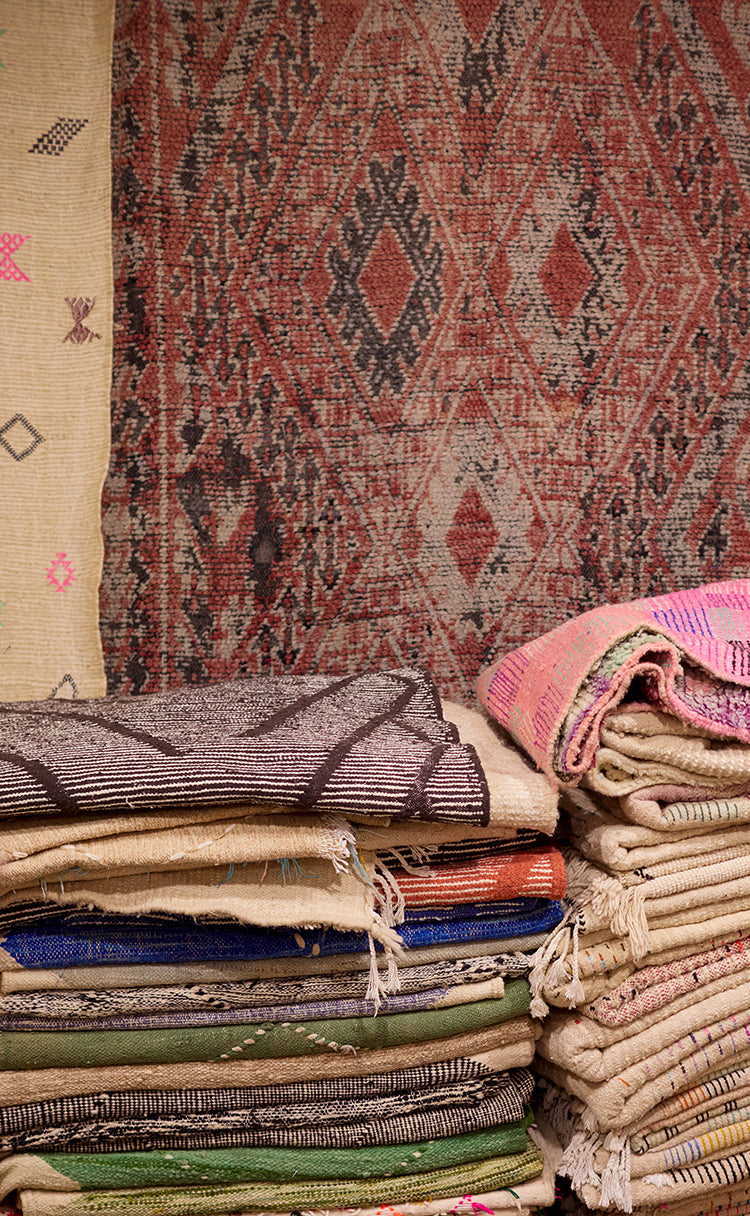
The souks of Marrakech are known for artisanal goods such as handwoven rugs, colourful ceramics and small bottles of ‘liquid gold’ in the form of argan oil. Many travellers are happy to pay for such handmade products as a lasting souvenir. But it is not always clear where these items come from, or who made them. And yet, understanding that story can give your journey far greater meaning.


The rise of women’s cooperatives
This is where the story of women’s cooperatives begins. Across Morocco, women are joining forces to turn traditional crafts into a source of income. Not in the busy tourist hotspots, but often in villages and workshops further afield. Because the supply chain is shorter, a larger share of the income tends to go directly to the makers.
Many of these cooperatives were founded from the 1990s onwards, when it became clear that women, particularly outside the tourism sector, had very limited access to paid work. Not because they lacked the ability or ambition, but because they were traditionally responsible for the household and family. In many cases, Moroccan women were financially dependent on their partners and had little opportunity to earn an independent income. With the emergence of women’s cooperatives, that slowly began to change. Women who join these cooperatives gain access to training, work together on production and sales, and gradually build their own income.
Nearly 8,000 women led cooperatives
In 2005, this development received a significant boost with the launch of the National Initiative for Human Development, INDH, by King Mohammed VI. Since then, the programme has supported more than 22,000 projects, including thousands of cooperatives across Morocco. Today, the country counts over 60,000 cooperatives, of which nearly 8,000 are run entirely by women. In total, more than 260,000 women work within cooperatives, often outside the main tourist areas.

But what about the tourism sector itself? Here too, women remain underrepresented, a pattern seen worldwide. In roles such as guides, entrepreneurs and leadership positions, women are still in the minority, according to UN Tourism figures, Equality in Tourism 2024. In Morocco, women’s cooperatives offer an alternative, a space where women can work independently and build an income. And as a traveller, you can often visit them, if you know where to look.

The story behind the product
Women’s cooperatives not only create opportunities, they also help preserve crafts passed down through generations. For many women, this work is a source of pride. These are techniques learned from mothers and grandmothers. Before a bottle of argan oil reaches a shop, for example, it goes through a meticulous process. The nuts are cracked by hand, the kernels roasted and ground into a paste, before the oil is slowly pressed. This work often takes place within cooperatives, where women collaborate closely. It is time consuming and entirely manual, and that is precisely what makes the oil so valuable. For many women, it is a vital part of daily life and a way to continue tradition.

Tradition versus reality
Yet there is another, more complex reality. The image of women’s cooperatives is hopeful, but not everything is as rosy as it seems. The work is physically demanding and time intensive. It also often does not generate enough income for women to achieve full financial independence. Part of the revenue never reaches them, as many cooperatives rely on intermediaries to sell their products.
The future is not guaranteed either. It is often older women who carry out this demanding work, while younger generations, like elsewhere in the world, are more likely to pursue different lives in the city. As a result, the transmission of knowledge and tradition is increasingly under pressure. Women’s cooperatives offer opportunity, income and pride, but they do not solve everything.
How you, as a traveller, can make a difference
Because women producers do not always benefit fairly from the sale of handmade goods, how and where you buy matters. These tips can help you make a meaningful difference and enrich your journey at the same time.
You can search endlessly online, but most women’s cooperatives are not listed. They are hidden in villages, along the edges of the Atlas Mountains or on lesser known routes. It is often through conversations with locals, at your riad, with a driver or a guide, that you discover them.
If you find a cooperative run by or supporting women, travel there with a local guide. They often work closely with communities and know the region well. Many cooperatives are located outside the city, so going independently is not always practical or safe.
By buying directly from women’s cooperatives, a larger share of the income stays with the women themselves. In return, you gain a unique insight into centuries old traditions.
Your interest is valuable to the women you meet. Ask about their process, their products and their work. If language is a barrier, a guide can help translate.
Not everyone can travel beyond the city, and that is perfectly fine. Even in popular souks, you can make more conscious choices. Ask where a product comes from, who made it and how it was produced. You may not always get a full answer, but sometimes meaningful travel begins with simply asking a question.
If you are considering a trip to Morocco, your choices, what you buy and who you visit, can contribute, however modestly, to a better future for women. But above all, it is the encounter with the women and their stories that will make your journey truly meaningful.
We believe in the power of travel, how it enriches you and can also create positive impact for the people you meet along the way. That sense of reciprocity drives us every day. The travel industry worldwide is largely powered by women, yet they do not always receive the opportunities they deserve. That is why we are building a brand that inspires meaningful travel and contributes to greater equality in tourism:
We're in business to empower women through travel.

